Lead Poisoning in South Asia: A Public Health Crisis

Lead (Pb) poisoning has been a persistent problem in South Asia for many years, although it has recently gained renewed attention. Estimates suggest that half of the 800 million children worldwide with elevated blood lead levels (≥5 μg/dL) live in South Asia1. This alarming statistic has lightened panel discussions around a long-standing issue about how can we effectively address lead poisoning in South Asia by examining its impact, challenges, and evidence-based policy solutions?
Total
0
Shares
Prev
Policy Brief: Innovation Vouchers for MSMEs

Policy Brief: Innovation Vouchers for MSMEs

ASIA Policy Brief

Next
Paper Presentation At Gyan Bharatam International Conference, 11th-13th September 2025

Paper Presentation At Gyan Bharatam International Conference, 11th-13th September 2025

Paper Presentation At Gyan Bharatam International Conference, 11th-13th

You May Also Like

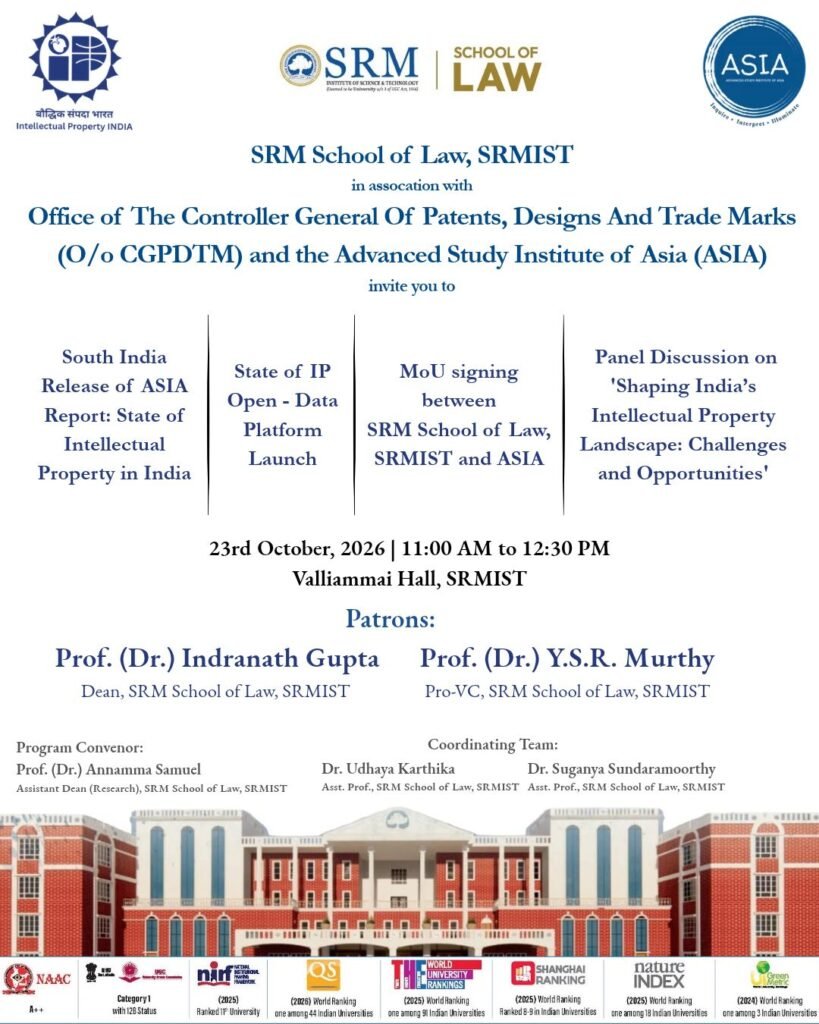
Join us for the South India release of State of Intellectual Property in India, featuring a distinguished panel discussion on IP reforms, innovation and economic development.

Event details

Date: 23 October 2026
Time: 11:00 AM–12:30 PM IST
Venue: Valliammai Hall, SRM Institute of Science and Technology (SRMIST), Tamil Nadu, India.

Privacy Overview

This website uses cookies so that we can provide you with the best user experience possible. Cookie information is stored in your browser and performs functions such as recognising you when you return to our website and helping our team to understand which sections of the website you find most interesting and useful.